Showing posts with label Youcef Nadarkhani. Show all posts
Saturday, February 25, 2012
White House statement about Youcef Nadarkhani
Statement by the Press Secretary on the Case of Iranian Pastor Youcef Nadarkhani
The United States condemns in the strongest possible terms reports that Iranian authorities’ reaffirmed a death sentence for Iranian Pastor Youcef Nadarkhani for the sole reason of his refusal to recant his Christian faith. This action is yet another shocking breach of Iran’s international obligations, its own constitution, and stated religious values. The United States stands in solidarity with Pastor Nadarkhani, his family, and all those who seek to practice their religion without fear of persecution—a fundamental and universal human right. The trial and sentencing process for Pastor Nadarkhani demonstrates the Iranian government’s total disregard for religious freedom, and further demonstrates Iran's continuing violation of the universal rights of its citizens. The United States calls upon the Iranian authorities to immediately lift the sentence, release Pastor Nadarkhani, and demonstrate a commitment to basic, universal human rights, including freedom of religion. The United States renews its calls for people of conscience and governments around the world to reach out to Iranian authorities and demand Pastor Nadarkhani's immediate release. [1]
Tuesday, October 11, 2011
Youcef's death sentence is text book on how to throw out all the rules

This brutality is not Islam :The death sentence given to Youcef Nadarkhani in Iran is an affront to universal moral values and a disservice to Muslims
by Mehdi Hasan
In 1948, most of the world's Muslim-majority nations signed up to theUniversal Declaration of Human Rights, including article 18, "the right to freedom of thought, conscience and religion" which includes, crucially, the "freedom to change his religion or belief". The then Pakistani foreign minister, Muhammad Zafarullah Khan, wrote: "Belief is a matter of conscience, and conscience cannot be compelled."
Fast-forward to 2011: 14 Muslim-majority nations make conversion away from Islam illegal; several – including Saudi Arabia, Afghanistan and Sudan – impose the death penalty on those who disbelieve. The self-styled Islamic Republic of Iran has sentenced to death by hanging a Christian pastor, born to Muslim parents, for apostasy. At the time of writing, Youcef Nadarkhani, head of a network of Christian house churches in Iran, is on death row for refusing to recant and convert back to Islam.
The decision to execute Nadarkhani beggars belief. For a start, the sentence handed down by judges in the pastor's home city of Rasht a year ago, and affirmed by the country's supreme court in June, is in clear violation not just of the Universal Declaration of Human Rights but Iran's own constitution. Article 23 is crystal clear: "The investigation of individuals' beliefs is forbidden, and no one may be molested or taken to task simply for holding a certain belief."
Pleas for clemency from the archbishop of Canterbury, the UK's foreign secretary and Amnesty International, among others, have fallen on deaf ears in Tehran. Meanwhile the silence from the world's Muslims – especially the UK's usually voluble Muslim organisations and self-appointed "community leaders" – has been shameful. The irony is that I have yet to come across an ordinary Muslim who agrees that a fellow believer who loses, changes or abandons his or her faith should be hanged. Yet frustratingly few Muslims are willing to speak out against such medieval barbarism. We mumble excuses, avert our eyes.
There is a misguided assumption among many Muslims that such an abhorrent punishment is divinely mandated. It isn't. Classical Muslim jurists wrongly conflated apostasy with treason. The historical fact is that the prophet Muhammad never had anyone executed for apostasy alone. In one well-documented case, when a Bedouin man disowned his decision to convert to Islam and left the city of Medina, the prophet took no action against him, remarking only that, "Medina is like a pair of bellows: it expels its impurities and brightens and clears its good".
Nor does the Qur'an say that a Muslim who apostasises be given any penalty. Freedom of religion is guaranteed by Islam's holy book in the famous verse: "Let there be no compulsion in religion" (2:256). Apostasy is deemed a sin, but the Qur'an repeatedly refers to punishment in the next world, not this one. Take the 137th verse of chapter 4: "Those who believe then disbelieve, again believe and again disbelieve, then increase in disbelief, God will never forgive them nor guide them to the Way" (4:137). This verse, which explicitly allows for disbelief, followed by belief, followed once again by disbelief, suggests any punishment is for God to deliver – not judges in Iran, Saudi Arabia or anywhere else.
Interestingly, the judgment in the Nadarkhani case is based not on Qur'anic verses but the fatwas of various ayatollahs. Fatwas, however, differ. For example, the late Grand Ayatollah Hussein Ali Montazeri, a grand ayatollah and one-time heir apparent to Ayatollah Khomeini, argued that the death penalty for apostasy was originally prescribed to punish only political conspiracies against the nascent Islamic community; Montazeri believed Muslims today should be free to convert to another religion.
The decision to execute Nadarkhani, therefore, is both an affront to universal moral values and a disservice to the cause of Islam. There can be no freedom of religion without the freedom to leave or change one's religion. To try to control a person's mind and heart, their thoughts and beliefs, is the ultimate negation of individual freedom. It is totalitarianism, pure and simple.
It also doesn't work. Another late Iranian ayatollah, and high-profile ally of Khomeini, Murtaza Muttahari, once wrote of the sheer pointlessness of any and all measures to compel belief upon a Muslim (or ex-Muslim!), arguing that it was impossible to force anyone to hold the level of rationally inspired faith required by the religion of Islam. "It is not possible to spank a child into solving an arithmetical problem," proclaimed Muttahari. "His mind and thought must be left free in order that he may solve it. The Islamic faith is something of this kind." Muslims have to ask ourselves: Is the God we worship so weak and needy that he requires us to force our fellow humans to worship him? Is our religion so frail and insecure that it cannot tolerate any rejection whatsoever? And why are we silent as an innocent Christian is sentenced to death in the name of Islam? To hang a man for refusing to believe in Islam is theologically and morally unjustifiable; it is not just unIslamic but anti-Islamic.[Guardian]
Fast-forward to 2011: 14 Muslim-majority nations make conversion away from Islam illegal; several – including Saudi Arabia, Afghanistan and Sudan – impose the death penalty on those who disbelieve. The self-styled Islamic Republic of Iran has sentenced to death by hanging a Christian pastor, born to Muslim parents, for apostasy. At the time of writing, Youcef Nadarkhani, head of a network of Christian house churches in Iran, is on death row for refusing to recant and convert back to Islam.
The decision to execute Nadarkhani beggars belief. For a start, the sentence handed down by judges in the pastor's home city of Rasht a year ago, and affirmed by the country's supreme court in June, is in clear violation not just of the Universal Declaration of Human Rights but Iran's own constitution. Article 23 is crystal clear: "The investigation of individuals' beliefs is forbidden, and no one may be molested or taken to task simply for holding a certain belief."
Pleas for clemency from the archbishop of Canterbury, the UK's foreign secretary and Amnesty International, among others, have fallen on deaf ears in Tehran. Meanwhile the silence from the world's Muslims – especially the UK's usually voluble Muslim organisations and self-appointed "community leaders" – has been shameful. The irony is that I have yet to come across an ordinary Muslim who agrees that a fellow believer who loses, changes or abandons his or her faith should be hanged. Yet frustratingly few Muslims are willing to speak out against such medieval barbarism. We mumble excuses, avert our eyes.
There is a misguided assumption among many Muslims that such an abhorrent punishment is divinely mandated. It isn't. Classical Muslim jurists wrongly conflated apostasy with treason. The historical fact is that the prophet Muhammad never had anyone executed for apostasy alone. In one well-documented case, when a Bedouin man disowned his decision to convert to Islam and left the city of Medina, the prophet took no action against him, remarking only that, "Medina is like a pair of bellows: it expels its impurities and brightens and clears its good".
Nor does the Qur'an say that a Muslim who apostasises be given any penalty. Freedom of religion is guaranteed by Islam's holy book in the famous verse: "Let there be no compulsion in religion" (2:256). Apostasy is deemed a sin, but the Qur'an repeatedly refers to punishment in the next world, not this one. Take the 137th verse of chapter 4: "Those who believe then disbelieve, again believe and again disbelieve, then increase in disbelief, God will never forgive them nor guide them to the Way" (4:137). This verse, which explicitly allows for disbelief, followed by belief, followed once again by disbelief, suggests any punishment is for God to deliver – not judges in Iran, Saudi Arabia or anywhere else.
Interestingly, the judgment in the Nadarkhani case is based not on Qur'anic verses but the fatwas of various ayatollahs. Fatwas, however, differ. For example, the late Grand Ayatollah Hussein Ali Montazeri, a grand ayatollah and one-time heir apparent to Ayatollah Khomeini, argued that the death penalty for apostasy was originally prescribed to punish only political conspiracies against the nascent Islamic community; Montazeri believed Muslims today should be free to convert to another religion.
The decision to execute Nadarkhani, therefore, is both an affront to universal moral values and a disservice to the cause of Islam. There can be no freedom of religion without the freedom to leave or change one's religion. To try to control a person's mind and heart, their thoughts and beliefs, is the ultimate negation of individual freedom. It is totalitarianism, pure and simple.
It also doesn't work. Another late Iranian ayatollah, and high-profile ally of Khomeini, Murtaza Muttahari, once wrote of the sheer pointlessness of any and all measures to compel belief upon a Muslim (or ex-Muslim!), arguing that it was impossible to force anyone to hold the level of rationally inspired faith required by the religion of Islam. "It is not possible to spank a child into solving an arithmetical problem," proclaimed Muttahari. "His mind and thought must be left free in order that he may solve it. The Islamic faith is something of this kind." Muslims have to ask ourselves: Is the God we worship so weak and needy that he requires us to force our fellow humans to worship him? Is our religion so frail and insecure that it cannot tolerate any rejection whatsoever? And why are we silent as an innocent Christian is sentenced to death in the name of Islam? To hang a man for refusing to believe in Islam is theologically and morally unjustifiable; it is not just unIslamic but anti-Islamic.[Guardian]
Iranian pastor's case referred to ayatollah
TEHRAN (BP) -- The case of imprisoned Iranian pastor Yousef Nadarkhani now has been referred to Iran's supreme leader, Ayatollah Khamenei, Agence France-Presse, a French news service, reported Oct. 10.
The ayatollah has ultimate authority in the Islamic Republic of Iran, and AFP said the move to involve him in the case could mean a delay in the final verdict, which had been expected Monday.
"The step to involve the most powerful leader in Iran demonstrates that Iran is feeling the pressure," Jordan Sekulow, executive director of the American Center for Law and Justice, said. "Involving the Supreme Leader Ayatollah Khamenei in a case before a regional court is unusual. We can be certain if the lies spread by Iran were true -- that Youcef was instead convicted of rape, extortion and Zionism -- the court would not seek the advice of the Supreme Ayatollah.
"Now that Iran's Supreme Leader will be considering the case, it is imperative that our top diplomat, Secretary of State Clinton, call for Pastor Youcef's unconditional release," Sekulow wrote in a post on the group's website Oct. 10.
More than 125,000 people had signed the petition asking Clinton to pressure Iran on behalf of the pastor, Sekulow said. Also, bipartisan support was growing in Congress with Reps. Joe Pitts, R.-Pa., and Heath Schuler, D.-N.C., writing a letter to Clinton urging her to intervene.
"We implore you to raise your voice at this critical juncture on behalf of Pastor Nadarkhani. We must not stand by while the Iranian Regime executes a man who has committed no crime," the letter, released to the ACLJ, said.
By Oct. 7 the letter had been signed by at least 39 members of Congress, including 13 Democrats. Notably, Rep. Keith Ellison, D.-Minn., the first Muslim elected to Congress, was among them.
Sekulow asked Americans to sign the Clinton petition and to contact their members of Congress and request that they sign the Pitts-Shuler letter with urgency, given the possibility that Nadarkhani could be executed at any time without any prior announcement.
Meanwhile, the European Centre for Law and Justice, the ACLJ's international affiliate which holds special consultative status with the United Nations, submitted a letter on Nadarkhani's behalf, calling on the United Nations to secure the pastor's immediate and unconditional release.
The letter explained that Nadarkhani's conviction and death sentence are inconsistent with the Iranian constitution and the nation's obligations under international law. The ECLJ reminded the United Nations that the pastor's case "has tremendous implications for all Christians and religious minorities in Iran and is yet another indicator of the regime's disregard for basic human rights and freedoms."
Nadarkhani, 32, was arrested in 2009 and charged with apostasy, an offense punishable by hanging. A lower court found that while he had never been Muslim, he was guilty of apostasy because he came from a Muslim family. The Iranian Supreme Court upheld his death sentence.
Nadarkhani's refusal to recant his faith has inspired Christians worldwide. The ACLJ reported one of his court exchanges.
"Repent means to return. What should I return to? To the blasphemy that I had before my faith in Christ?" he asked.
"To the religion of your ancestors, Islam," the judge reportedly replied.
"I cannot," Nadarkhani responded.[BP]
The ayatollah has ultimate authority in the Islamic Republic of Iran, and AFP said the move to involve him in the case could mean a delay in the final verdict, which had been expected Monday.
"The step to involve the most powerful leader in Iran demonstrates that Iran is feeling the pressure," Jordan Sekulow, executive director of the American Center for Law and Justice, said. "Involving the Supreme Leader Ayatollah Khamenei in a case before a regional court is unusual. We can be certain if the lies spread by Iran were true -- that Youcef was instead convicted of rape, extortion and Zionism -- the court would not seek the advice of the Supreme Ayatollah.
"Now that Iran's Supreme Leader will be considering the case, it is imperative that our top diplomat, Secretary of State Clinton, call for Pastor Youcef's unconditional release," Sekulow wrote in a post on the group's website Oct. 10.
More than 125,000 people had signed the petition asking Clinton to pressure Iran on behalf of the pastor, Sekulow said. Also, bipartisan support was growing in Congress with Reps. Joe Pitts, R.-Pa., and Heath Schuler, D.-N.C., writing a letter to Clinton urging her to intervene.
"We implore you to raise your voice at this critical juncture on behalf of Pastor Nadarkhani. We must not stand by while the Iranian Regime executes a man who has committed no crime," the letter, released to the ACLJ, said.
By Oct. 7 the letter had been signed by at least 39 members of Congress, including 13 Democrats. Notably, Rep. Keith Ellison, D.-Minn., the first Muslim elected to Congress, was among them.
Sekulow asked Americans to sign the Clinton petition and to contact their members of Congress and request that they sign the Pitts-Shuler letter with urgency, given the possibility that Nadarkhani could be executed at any time without any prior announcement.
Meanwhile, the European Centre for Law and Justice, the ACLJ's international affiliate which holds special consultative status with the United Nations, submitted a letter on Nadarkhani's behalf, calling on the United Nations to secure the pastor's immediate and unconditional release.
The letter explained that Nadarkhani's conviction and death sentence are inconsistent with the Iranian constitution and the nation's obligations under international law. The ECLJ reminded the United Nations that the pastor's case "has tremendous implications for all Christians and religious minorities in Iran and is yet another indicator of the regime's disregard for basic human rights and freedoms."
Nadarkhani, 32, was arrested in 2009 and charged with apostasy, an offense punishable by hanging. A lower court found that while he had never been Muslim, he was guilty of apostasy because he came from a Muslim family. The Iranian Supreme Court upheld his death sentence.
Nadarkhani's refusal to recant his faith has inspired Christians worldwide. The ACLJ reported one of his court exchanges.
"Repent means to return. What should I return to? To the blasphemy that I had before my faith in Christ?" he asked.
"To the religion of your ancestors, Islam," the judge reportedly replied.
"I cannot," Nadarkhani responded.[BP]
Thursday, September 29, 2011
White House Condemns Possible Execution of Iranian Pastor
"Pastor Nadarkhani has done nothing more than maintain his devout faith, which is a universal right for all people," the statement released by the White House read. "That the Iranian authorities would try to force him to renounce that faith violates the religious values they claim to defend, crosses all bounds of decency, and breaches Iran's own international obligations. A decision to impose the death penalty would further demonstrate the Iranian authorities' utter disregard for religious freedom, and highlight Iran's continuing violation of the universal rights of its citizens. We call upon the Iranian authorities to release Pastor Nadarkhani, and demonstrate a commitment to basic, universal human rights, including freedom of religion."
Attorney Mohammad Ali Dadkhah told The Associated Press on Thursday that his client has appeared before the appeals court over the past four days and expects a ruling by the end of next week. Dadkhah said he believes there's a "95 percent chance" of acquittal for Nadarkhani.
Dadkhah said neither Iranian law nor clerics have ever stipulated the death penalty as punishment for converting from Islam to Christianity.[FOXNews]
Wednesday, September 28, 2011
Iranian Pastor Faces Execution for Refusing to Recant Christian Faith
An Iranian pastor who has refused to renounce his Christian faith faces execution as early as Wednesday after his sentence was upheld by an Iranian court.
Pastor Youcef Nadarkhani, who maintains he has never been a Muslim as an adult, has Islamic ancestry and therefore must recant his faith in Jesus Christ, the 11th branch of Iran's Gilan Provincial Court ruled. Iran's Supreme Court had ordered the trial court to determine whether Nadarkhani had been a Muslim prior to converting toChristianity.
The judges, according to the American Center for Law & Justice, demanded that Nadarkhani, 34, recant his Christian faith before submission of evidence. Though the judgment runs against current Iranian and international laws and is not codified in Iranian penal code, the judge stated that the court must uphold the decision of the 27th Branch of the Supreme Court in Qom.
When asked to repent, Nadarkhani stated: "Repent means to return. What should I return to? To the blasphemy that I had before my faith in Christ?"
"To the religion of your ancestors, Islam," the judge replied, according to the American Center for Law & Justice.
"I cannot," Nadarkhani said.
Nadarkhani is the latest Christian cleric to be imprisoned in Iran for his religious beliefs. According to Elam Ministries, a United Kingdom-based organization that serves Christian churches in Iran, there was a significant increase in the number of Christians arrested solely for practicing their faith between June 2010 and January 2011. A total of 202 arrests occurred during that six-month period, including 33 people who remained in prison as of January, Elam reported.
An Assyrian evangelical pastor, Rev. Wilson Issavi, was imprisoned for 54 days for allegedly converting Muslims prior to his release in March 2010, Elam officials told FoxNews.com.
Nadarkhani, a pastor in the 400-member Church of Iran, has been held in that country's Gilan Province since October 2009, after he protested to local education authorities that his son was forced to read from the Koran at school. His wife, Fatemeh Pasandideh, was also arrested in June 2010 in an apparent attempt to pressure him to renounce his faith. She was released in October 2010, according to Amnesty International.
Nadarkhani was sentenced to death for apostasy last September based on religious writings by Iranian clerics, including Ayatollah Khomeini, the founder of the Islamic Republic of Iran, despite the fact that there is no offense of "apostasy" in the nation's penal code, Amnesty International reports.
In June, the Supreme Court of Iran ruled that a lower court should re-examine procedural flaws in the case, giving local judges the power to decide whether to release, execute or retry Nadarkhani. The verdict, according to Amnesty International, includes a provision for the sentence to be overturned should Nadarkhani renounce his faith.
Elise Auerbach, an Iranian analyst for Amnesty International USA, told FoxNews.com that an execution for apostasy has not been carried out in Iran since 1990. Nadarkhani's sentence is a "clear violation of international law," she said.
"The key is to keep up the pressure and to publicize the story because it obviously outrages most people," Auerbach said. "It's part of the pattern of persecution based on religion in Iran."
Kiri Kankhwende, a spokeswoman for Christian Solidarity Worldwide, a human rights organization that specializes in religious freedom, told FoxNews.com that Nadarkhani was asked for the fourth time to renounce his faith during a hearing early Wednesday and he denied that request.
"We're waiting to hear the final outcome," she told FoxNews.com. "We're still waiting to hear what they've decided."
Kankhwende said Nadarkhani could be executed Wednesday or Thursday.
"Iran is unpredictable," she said. "We can't say when it might happen. It's a very real threat, but we can't say when exactly."
Officials at the U.S. State Department declined to comment when reached on Wednesday.Attempts to reach his attorney, Mohammed Ali Dadkhah, were not successful.
House Speaker John Boehner said Nadarkhani's case is "distressing for people of every country and creed," according to a statement released on Wednesday.
"While Iran's government claims to promote tolerance, it continues to imprison many of its people because of their faith," the statement read. "This goes beyond the law to an issue of fundamental respect for human dignity. I urge Iran's leaders to abandon this dark path, spare [Nadarkhani's] life, and grant him a full and unconditional release."
Father Jonathan Morris, a Catholic priest in the Archdiocese of New York and an analyst for Fox News Channel, said Nadarkhani's case is "unmistakable evidence" that Iran is executing Christians simply because they refuse to become Muslims.
Morris continued: "Will President Obama, and the free world, allow the United Nations to continue in its cowardly silence on this matter?"
Read more: [FOXNews]
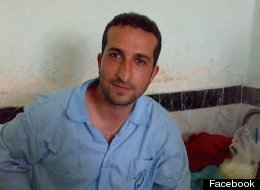
Iranian pastor refuses to recant, could be executed
There is no justice even by what little I know about Iranian law. In order to execute this man, they go beyond Iranian law. They have even verified that he was never a Muslim. Presumably, he never said the shahadah, "There is one God and Mohammed is His prophet." Yet they will execute him, because of his ancestry. He is an apostate, because he was born Muslim. They will make up any excuse to kill this man for his faith. He chose to reject what he never chose to accept.
TEHRAN (BP) -- A Christian pastor in Iran has twice refused to recant his faith in court and could be executed within days, which would make him the first since 1990 to be put to death by the government for apostasy.
Yousef Nadarkhani, who leads a 400-person house church movement, refused in court on Sept. 25 and Sept. 26 to recant Christianity and was scheduled to get two more chances on Sept. 27 and Sept. 28, according to the British-based Christian Solidarity Worldwide (CSW), which monitors religious freedom.
If he refuses the next two times to recant, he will be executed, CSW reported.
Unlike the case of the two American hikers who were freed, Nadarkhani's case has yet to receive widespread worldwide attention, although the Christian community has followed it since his arrest in 2009.
"The American interfaith delegation ... who made headlines when they traveled to Tehran and secured the release of the two American hikers last week should pack their bags again," Nina Shea, director of the Hudson Institute's Center on Religious Freedom and a member of the U.S. Commission on International Religious Freedom, wrote Sept. 26. "They need to make a return trip. And they better hurry."
Nadarkhani seemed to have a sliver of hope earlier this year when the Iranian Supreme Court ordered a lower court to examine whether he was ever a Muslim -- a fact essential to determine whether he left Islam for Christianity. But that lower court in Rasht, Iran, found that although Nadarkhani was never a practicing Muslim "he remains guilty of apostasy because he has Muslim ancestry," CSW reported.
Advocates familiar with Nadarkhani's case said conditions of his imprisonment have varied from solitary confinement to being allowed visits from family members and his attorney. Jason DeMars, president of Present Truth Ministries, a group that works with Christians in Iran, said officials have repeatedly used pressure tactics to force Nadarkhani to become a Muslim, including threats to seize his children and arresting his wife on apostasy charges. During June 2010, officials found his wife, Fatemah Pasindedih, guilty of the charges, but her conviction was stricken on appeal, and she was released in October.
Nadarkhani has had run-ins with Iranian officials before. In December 2006, he was arrested on other apostasy-related charges and held for two weeks. Officials have targeted Nadarkhani, DeMars said, because he leads a house church movement.
There is no Iranian criminal statute requiring the execution of those who abandon Islam.
According to DeMars, the judges who issued the ruling appear to be relying on at least one fatwa, or religious edict, by the Grand Ayatollah Ruhollah Khomeini, leader of the 1979 Iranian Revolution, and on edicts issued by Grand Ayatollah Naser Makarem Shirazi, a current religious leader in Iran. The edicts are based upon Shiite interpretations of the Quran and Hadith, a written record of the sayings and actions of Muhammad.
The last person to be executed for "apostasy" in Iran was Hossein Soodmand, who was hanged on Dec. 3, 1990. Soodmand's case has parallels with Nadarkhani's. Soodmand also was a pastor, and he also became a Christian as a teenager. Soodmand however, believed in the Islamic religion as a child.
[Baptist Press]
Subscribe to:
Posts (Atom)