Showing posts with label abortion. Show all posts

Thursday, August 6, 2015

Answering a facebook question

source
Here is the short answer. It was not always so. Even in Exodus 21:22-23, feticide is not necessarily a capital crime and Exodus is full of capital offenses like murder.

Following tradition, including contemporary Biblical interpretation, English common law came up with the "born alive rule".
If a woman be quick with child [five months pregnant], and by a Potion or otherwise killeth it in her womb; or if a man beat her, whereby the child dieth in her body, and she is delivered of a dead child, this is a great [misdemeanor], and no murder: but if the child be born alive, and dieth of the Potion, Battery or other cause, this is murder: for in Law it is accounted a reasonable creature, in rerum natura [in existence], when it is born alive.
Common Law thought that pregnancy was a dichotomy; the vessel started growing months before the soul was implanted. There was no punishment for killing a souless vessel, but if there was a soul, the crime was a misdemeanor unless the child was born outside the womb alive.

In 1984, the Massachusetts Supreme Court argued that medical science had outdated the "born alive rule" and "“infliction of prenatal injuries resulting in the death of a viable fetus, before or after it is born, is homicide.” Since then at least 38 states have updated their laws accordingly.[1]

PS - 1984 is the same year that New York overturned the common law tradition that said it was not rape if a husband forced his wife to have sex even under threat of death.

Monday, July 27, 2015

The Numbers Don't Lie

One of the things that I do on this blog is critique things that wind up in my facebook feed.  First, I am pro-life. This is why I despise bad pro-life arguments.  I think that when you mislead people to the point that they cannot tell fact from fiction then you wind up with a guy like Donald Trump running for the White House.  This is why I was disappointed when this June 24, 2014 post by the National Pro-Life Alliance showed up in my feed.

"The numbers don't lie. 

Abortion is the leading cause of death in the United States every year."
I dealt with this last December in Do these statistics bother you?.  Someone reminded me then that the post did not say that abortion was the leading cause, but it was one of many leading causes.  Also the numbers were more fuzzy since I could not fact check how many deaths could be attributed to each leading cause since 1973.  This post by NPLA gives easily fact checkable numbers and states that "abortion is the leading cause of death in the United States every year".

First let's check their numbers.  According to the CDC they are correct about heart disease and cancer.  Again citing the CDC, they are also correct about accidents.  However the abortion number is 150% higher than the actual number.  150% is not mere rounding so let's look at the actual numbers.  According to Guttmacher, there were 1.06 million abortions in the United States during the year 2011 which was down 13% from the 1.21 million in year 2008.  1.6 million is even 133% higher than the 2008 number.  In fact, 1.6 million is higher than the annual number for Mexico, Canada, and the United States combined from 1995-2008.

The NPLA is claiming that hundreds of thousands more abortions are occurring in the US than actually are.

As I mentioned last December, the miscarriage rate is higher than the abortion rate, especially if you believe, as I do, that life begins at conception.  Among women that know they are pregnant, the NIH places the rate between 15-20%. However a woman can be pregnant before she knows that she is.  If you monitor a woman's hormone levels, we discover that the rate is actually around 31% , because embryos commonly miscarry before a woman knows that she is pregnant.  


The 2011 abortion rate was 16.9%, the lowest since the 1973 rate of 16.3%.  A miscarriage rate of 31% is 180% higher than the abortion rate.  Even ignoring failed implantation, ectopic pregnancies, and twinning; the miscarriage rate is substantially higher.  If we consider the unborn, abortion is not the leading cause of death in the United States, miscarriage is. The fact that pro-life organizations ignore or minimize miscarriage to get at abortion is not appropriate.

Like last December, let's fix their chart by fixing the inflated abortion numbers and adding miscarriage.  Using the most recent abortion numbers of 1.06 million X 180% = 1.9 million miscarriages.


If life begins at conception and you include the unborn then miscarriage is the leading cause of death in the United States.

Monday, December 29, 2014

Do these statistics bother you?


Right Wing News posted this to their facebook this April.  First off there was no sourcing.  Second miscarriage is far more likely than abortion.  Years ago, I wrote a summary.
At an hour old, this single cell has an up hill battle. About 19.6 out of every 1000 women annually will have an abortion. This means that 22% of pregnancies will end in abortion [4], but this embryo only has about a 30-70% of even implanting in the uterus to transition from conception to pregnancy. [6] Even if she implants, she may not implant in the uterus. Ectopic pregnancies occur at 19.3 out of every 1000 pregnancies or about 2% of pregnancies. [7] Once implanted correctly, she still has about a 31% chance of miscarrying. [8] Things get a little more dicey when you considered that one out of eight embryos form twins, but only one out of 80 twins make it to birth. [9] All of this adds up to the embryo having as great as a 70% chance of not surviving to birth [8].
 The abortion rate used to be higher, but I think that it is safe to postulate that miscarriages are about twice as likely than abortions since 1973.  So the image should look something like this.


Now, I cannot vouch for the other statistics.  I know enough to know that AIDS, cancer, and heart disease survival rates have been increasing while violent crime has been decreasing.  However. miscarriage is never mentioned even though it is far more prevalent.

Sunday, August 18, 2013

How do you know it was effortlessly?

I was watching a "documentary" on how the world governments are actually fighting aliens. The "expert" mentioned that they can disable our technology so effortlessly. Let's just say for the sake of argument that I bought the whole Obama fighting space aliens thing, how do you know that it was effortlessly? Perhaps every time they disable our technology one must sacrifice their unborn child and immediately eternally endure the punishment for abortion in the Apocalypse of Peter (One of your secretions congealing into cannibalistic monsters that devour you, while your aborted fetus fries you with fire from their eyeballs).

Friday, August 16, 2013

What if we had the bodies of 50,000,000 babies...in a museum somewhere?

"What if we had the bodies of 50,000,000 babies piled on top of each other in a museum somewhere?"

Just doing the math:  Assuming current rates, about 78.9% of those 50,000,000 were 10 weeks or less, mean they were about an inch long or less.  That is 39,450,000 grape sized embryos or about the equivalent to 90,000 gallon swimming pool. 9.1%, 4, 550,000, were  11-12 weeks and about 2 inches which adds about another 21,000 gallons.  6.6% were 13-15 weeks and up to 4 inches long which is about another 30,000 gallons. 3.8%, 1,900,000, were at the most 10 inches or about 43,000 gallons.  Even being generous, the 1.5%, 750,000 that were over 20 weeks were generously 20 inches or at the most about 34,000 gallons.   Total about 220,000 gallons.

I don't know if it would make the point that she wants it to make.  On the one hand, seeing all those aborted at one time could make a point.  On the other hand, you could physically put all those aborted into one location 1/3 the size of an Olympic swimming pool.  More to her point about late term abortion, 10 weeks and less abortion amount for 78.9% of abortions, but only 41% of the contents of our hypothetical abortion exhibit. One could use this as an argument to prevent later term abortions, but the vast majority of mothers would not abort an 11 week old fetus. 

Sources - http://www.lifesitenews.com/twenty-weeks-pregnant-with-twins-but-last-week-she-had-an-abortion.html
http://www.guttmacher.org/pubs/fb_induced_abortion.html
http://www.traditionaloven.com/culinary-arts/volume/convert-sphere-1-in-d-to-galon-gal-us.html
http://www.babycenter.com/slideshow-baby-size?slideNumber=7

Tuesday, December 4, 2012

Who doesn't think that they are alive?


This is the second generation of this strawman that I have seen on Facebook.  I used to think that everyone knew that it was a strawman, until I started seeing friends repeat it and someone posted it in one of the threads that I was commenting on.  OK, first watch this Sesame Street video to learn what is alive.  


Does that Paramecium on the left, breath and eat and grow? [1]  Certainly it does.  Does that 24 to 26 week old fetus on the right, breath and eat and grow? [2]  Certainly she does. (Human embryos and fetuses generally default to the female gender) So who is saying that a growing fetus with sleep cycles and a 40-90% chance of surviving outside of the womb [3] is not "life"?  The answer is no one.  Also, 88% of abortions happen in the first twelve weeks.  Only 1.5% of abortions are performed on fetuses over 20 weeks. [4] Most people who get abortions do not wish to terminate fetuses over 20 weeks.  Let's try this next one.


The picture is of a one hour old single cell embryo. [5] Now let's try the Sesame Street test.  Does she breath and eat and grow? Certainly she does.  Who dares to challenge the wisdom of the muppets? The answer is no one.  

At an hour old, this single cell has an up hill battle.  About 19.6 out of every 1000 women annually will have an abortion.  This means that 22% of pregnancies will end in abortion [4], but this embryo only has about a 30-70% of even implanting in the uterus to transition from conception to pregnancy. [6]  Even if she implants, she may not implant in the uterus.  Ectopic pregnancies occur at 19.3 out of every 1000 pregnancies or about 2% of pregnancies. [7] Once implanted correctly, she still has about a 31% chance of miscarrying. [8] Things get a little more dicey when you considered that one out of eight embryos form twins, but only one out of 80 twins make it to birth. [9] All of this adds up to the embryo having as great as a 70% chance of not surviving to birth [8].


Tubal Pregnancy
I type all of that to point out that when a embryo dies or miscarries, those terms mean that it was considered life to begin with.  The question is not whether she is life, but whether she is a person.  The irony here is that the first meme equates pond scum with a fetus.

Correction 12/5/2012: This post originally said that 19.6% of 1000 pregnancies end in abortion.  This was an error on my part.  It should have said 1000 women.  The abortion rate is about 11 times the ectopic pregnancy rate.  I apologize for the error.  

Sunday, May 6, 2012

1988: A secretion, but ain't there teeth?

[Edit - It is important to note that this was said twenty-four years ago.  Growing up, I was taught similar erroneous things.  Amazingly this quote made it into a Funny or Die video.  Also it reminds me of this Amazing what one can learn by experiment and Pliny's thoughts on Menstration ]

HARRISBURG — The odds that a woman who is raped will get pregnant are "one in millions and millions and millions," said state Rep. Stephen Freind, R-Delaware County, the Legislature's leading abortion foe.

The reason, Freind said, is that the traumatic experience of rape causes a woman to "secrete a certain secretion" that tends to kill sperm.

Two Philadelphia doctors specializing in human reproduction characterized Freind's contention as scientifically baseless.

Freind made the statement on a central Pennsylvania radio interview program earlier this month.

Freind, who has been trying for years to get strong anti-abortion laws through the Legislature, said yesterday that he's standing by his claim and will provide medical documentation to support it in about a week.

At a news conference on sex education on the Capitol steps, he told a cheering crowd, "If you're expecting me to back off, the answer is no."

Freind's comments came to light late last week. They originally were broadcast by Hanover radio station WHVR on March 1.

In an abortion debate with Barry Steinhardt of the American Civil Liberties Union, Freind said, according to transcripts: "It is almost but not quite impossible to become pregnant on the basis of rape. The odds are one in millions and millions and millions. And there is a physical reason for that.

"Rape, obviously, is a traumatic experience. When that traumatic experience is undergone, a woman secretes a certain secretion, which has a tendency to kill sperm."

Informed of Freind's remarks, Dr. Luigi Mastroianni Jr., director of the division of human reproduction at the Hospital of the University of Pennsylvania, said yesterday: "Boy, if I could find out what that (secretion) was, I'd use it as a contraceptive."

Mastroianni, who is also a past president of the American Fertility Society, added, "There is no such secretion."

He said Freind's statements were "scientifically unfounded" and "reflect a lack of concern for women who have been victimized by rape" by dismissing the act as not having consequence.

Dr. Richard Depp, chairman of the department of obstetrics and Gynecology at Thomas Jefferson University, said, "The only reality is that women get pregnant when they are ovulating."

He said of Freind's claim, "There's no basis for that. That's nonsense."

Both Mastroianni and Depp said women who are raped can and do become pregnant.

Yesterday, Freind cited a "Dr. Mecklenburg" as someone supporting his comments. He said Mecklenburg has 30 years' experience in obstetrics and gynecology, with clinics in Minnesota and Washington, D.C.

The American College of Obstetricians and Gynecologists in Washington lists a Fred E. Mecklenburg in Great Falls, Va., as a member. But neither the organization nor public telephone directories list any offices or phone numbers for Mecklenburg.

A staff member in Freind's office said she would check on the full identity of the physician cited by Freind. But she did not return phone calls after that.
[1] 

1996: Rape Related Pregnancies

The national rape-related pregnancy rate is 5.0% per rape among victims of reproductive age (aged 12 to 45); among adult women an estimated 32,101 pregnancies result from rape each year. Among 34 cases of rape-related pregnancy, the majority occurred among adolescents and resulted from assault by a known, often related perpetrator. Only 11.7% of these victims received immediate medical attention after the assault, and 47.1% received no medical attention related to the rape. A total 32.4% of these victims did not discover they were pregnant until they had already entered the second trimester; 32.2% opted to keep the infant whereas 50% underwent abortion and 5.9% placed the infant for adoption; an additional 11.8% had spontaneous abortion. [1]

Sunday, March 25, 2012

New Hampshire wants to educate women.

(e) Materials that inform the pregnant woman that there is evidence of a direct link between abortion and breast cancer. It is scientifically undisputed that full-term pregnancy reduces a woman’s lifetime risk of breast cancer. It is also undisputed that the earlier a woman has a first full-term pregnancy, the lower her risk of breast cancer becomes, because following a full-term pregnancy the breast tissue exposed to estrogen through the menstrual cycle is more mature and cancer resistant. In fact, for each year that a woman’s first full-term pregnancy is delayed, her risk of breast cancer rises 3.5 percent. The theory that there is a direct link between abortion and breast cancer builds upon this undisputed foundation. During the first and second trimesters of pregnancy the breasts develop merely by duplicating immature tissues. Once a woman passes the thirty-second week of pregnancy (third trimester), the immature cells develop into mature cancer resistant cells. When an abortion ends a normal pregnancy, the woman is left with more immature breast tissue than she had before she was pregnant. In short, the amount of immature breast tissue is increased and this tissue is exposed to significantly greater amounts of estrogen—a known cause of breast cancer. Women facing an abortion decision have a right to know that such medical data exists. At the very least, women must be informed that it is undisputed that pregnancy provides a protective effect against the later development of breast cancer. - HB 1659 - 2012  [1]

If it is undisputed that the earlier a woman "has a first full-term pregnancy, the lower her risk of breast cancer becomes," New Hampshire should legislate that Junior High and High School women have this information. Why only legislate this information for the 1/3 of women that will get an abortion? I am sure that there are childless third year graduate students that need to know.

Some quick references:

...The average age of first-time mothers in the U.S. jumped from 21.4 in 1970 to 25 in 2006, an increase of 3.6 years, according to a report in the August edition of NCHS Data Brief, a publication of the CDC's National Center for Health Statistics... The average age at first birth has risen five years or more in Washington, D.C., Massachusetts, and New Hampshire, while increasing less than 2.5 years in Mississippi, New Mexico, and Oklahoma... [2]

The median age for first marriage is 28.7 for males and 26.7 for females. [3]

Friday, March 2, 2012

Cathleen Kaveny Extended Interview - Law & Theology & Contraception

2008:"A person's a person no matter how small."

What is it about this children's book

That fills Dr. Seuss fans with such scorn?

Anti-abortion groups took a look

At Horton and they saw the unborn.

We all learned to read with the books written by Theodor Seuss Geisel and grew up with characters from the "Cat in the Hat" and "Yertle the Turtle" to the "Sneetches and the Grinch."

But do the books have a hidden meaning?

Since the 1980s, some anti-abortion rights groups have interpreted the book "Horton Hears a Who" as an anti-abortion parable.

If you don't remember, it's the tale of Horton the elephant who discovers a whole town of tiny people living on a speck of dust. Though his neighbors think he's crazy and make fun of him, Horton makes it his mission to protect his new friends, declaring his intention with the famous line:

"A person's a person no matter how small."

Despite the fact that the book was written in the 1950s, long before the legalization of abortion in 1973, the statement has become an anthem to legions of anti-abortion rights activists.

"Horton Hears a Who" has the message that every single person, no matter how small, deserves protection," says Kristi Burton, who leads Colorado for Equal Rights, a group that has drafted a state ballot initiative stating that life begins at conception.

"That's what our amendment is saying. Obviously, it uses legal language but it says the same thing."

Burton led a group of several dozen activists who attended the movie premiere of "Horton Hears a Who" in Denver Friday to praise the film's message and hand out T-shirts with Horton's famous statement.

That could get them in trouble with Dr. Seuss Enterprises, which represents the interests of the late author. According to Seuss biographer Phil Nel, Geisel threatened to sue an anti-abortion rights group during the 1980s that used the statement on its stationery, forcing them to back down.

Burton insists that her group talked to attorneys to make sure that they could reprint the sentence on their shirts. A lawyer for Dr. Seuss Enterprises did not return calls seeking comment.

As for the author himself, Nel says that he is not aware of Geisel ever publicly expressing his opinion on abortion.

"But given that he was a liberal Democrat who favored women's rights, it's fair to infer that he did not support that [anti-abortion] agenda."

Geisel's widow, Audrey, did not return calls seeking comment. But Karl ZoBell, the lawyer for Dr. Seuss Enterprises, told National Public Radio that "She doesn't like to hijack Dr. Seuss characters or material to front their own points of view."

Since the book was published in 1954, the same year as the landmark civil rights decision Brown vs. Board of Education, it was widely interpreted as a paean to the rights of minorities. One reviewer praised it as a "rhymed lesson in protection of minorities and their rights."

It's not the only Dr. Seuss book to arouse controversy and conflicting messages.

"The Lorax," a parable about the plight of the environment and the destruction caused by industrialized society, has been banned in some schools and libraries for its anti-timber industry focus. A group of timber companies even created its own version of the book, a logging-friendly tome called "The Truax."

Nel says that some of Geisel's books were shaped by his liberal politics.

"The Sneetches" was inspired by his opposition to anti-Semitism, but it also works as an anti-discrimination parable. "The Butter Battle Book" was a critique of Reagan's escalation of the nuclear arms race and "Yertle the Turtle" is an anti-fascist book inspired by Hitler."

Even the "Cat in the Hat" has a larger purpose beyond just teaching kids how to read, says Nel. "It's all about challenging authority. There's a theme in Seuss' book of the outsider, usually a child character, speaking up and making himself heard and making a difference. Look at little Jo Jo [in "Cat in the Hat']. It's his voice that puts them over the top."[1]

Killing babies no different from abortion, experts say


The article, published in the Journal of Medical Ethics, says newborn babies are not “actual persons” and do not have a “moral right to life”. The academics also argue that parents should be able to have their baby killed if it turns out to be disabled when it is born.

The journal’s editor, Prof Julian Savulescu, director of the Oxford Uehiro Centre for Practical Ethics, said the article's authors had received death threats since publishing the article. He said those who made abusive and threatening posts about the study were “fanatics opposed to the very values of a liberal society”.

The article, entitled “After-birth abortion: Why should the baby live?”, was written by two of Prof Savulescu’s former associates, Alberto Giubilini and Francesca Minerva.

They argued: “The moral status of an infant is equivalent to that of a fetus in the sense that both lack those properties that justify the attribution of a right to life to an individual.”

Rather than being “actual persons”, newborns were “potential persons”. They explained: “Both a fetus and a newborn certainly are human beings and potential persons, but neither is a ‘person’ in the sense of ‘subject of a moral right to life’.

“We take ‘person’ to mean an individual who is capable of attributing to her own existence some (at least) basic value such that being deprived of this existence represents a loss to her.”

As such they argued it was “not possible to damage a newborn by preventing her from developing the potentiality to become a person in the morally relevant sense”.

The authors therefore concluded that “what we call ‘after-birth abortion’ (killing a newborn) should be permissible in all the cases where abortion is, including cases where the newborn is not disabled”.

They also argued that parents should be able to have the baby killed if it turned out to be disabled without their knowing before birth, for example citing that “only the 64 per cent of Down’s syndrome cases” in Europe are diagnosed by prenatal testing.

Once such children were born there was “no choice for the parents but to keep the child”, they wrote.

“To bring up such children might be an unbearable burden on the family and on society as a whole, when the state economically provides for their care.”

However, they did not argue that some baby killings were more justifiable than others – their fundamental point was that, morally, there was no difference to abortion as already practised.

They preferred to use the phrase “after-birth abortion” rather than “infanticide” to “emphasise that the moral status of the individual killed is comparable with that of a fetus”.

Both Minerva and Giubilini know Prof Savulescu through Oxford. Minerva was a research associate at the Oxford Uehiro Centre for Practical Ethics until last June, when she moved to the Centre for Applied Philosophy and Public Ethics at Melbourne University.

Giubilini, a former visiting student at Cambridge University, gave a talk in January at the Oxford Martin School – where Prof Savulescu is also a director – titled 'What is the problem with euthanasia?'

He too has gone on to Melbourne, although to the city’s Monash University. Prof Savulescu worked at both univerisities before moving to Oxford in 2002.

Defending the decision to publish in a British Medical Journal blog, Prof Savulescu, said that arguments in favour of killing newborns were “largely not new”.

What Minerva and Giubilini did was apply these arguments “in consideration of maternal and family interests”.

While accepting that many people would disagree with their arguments, he wrote: “The goal of the Journal of Medical Ethics is not to present the Truth or promote some one moral view. It is to present well reasoned argument based on widely accepted premises.”

Speaking to The Daily Telegraph, he added: “This “debate” has been an example of “witch ethics” - a group of people know who the witch is and seek to burn her. It is one of the most dangerous human tendencies we have. It leads to lynching and genocide. Rather than argue and engage, there is a drive is to silence and, in the extreme, kill, based on their own moral certainty. That is not the sort of society we should live in.”

He said the journal would consider publishing an article positing that, if there was no moral difference between abortion and killing newborns, then abortion too should be illegal.

Dr Trevor Stammers, director of medical ethics at St Mary's University College, said: "If a mother does smother her child with a blanket, we say 'it's doesn't matter, she can get another one,' is that what we want to happen?

"What these young colleagues are spelling out is what we would be the inevitable end point of a road that ethical philosophers in the States and Australia have all been treading for a long time and there is certainly nothing new."

Referring to the term "after-birth abortion", Dr Stammers added: "This is just verbal manipulation that is not philosophy. I might refer to abortion henceforth as antenatal infanticide."
[1]

Tuesday, February 21, 2012

WebMD: Blighted Ovum


A blighted ovum occurs when a fertilized egg implants in the uterus but doesn't develop into an embryo. It is also referred to as an anembryonic pregnancy and is a leading cause of early pregnancy failure or miscarriage. Often it occurs so early that you don't even know you are pregnant.
A blighted ovum causes about one out of two miscarriages in the first trimester of pregnancy. A miscarriage is when a pregnancy ends on its own within the first 20 weeks.

Recommended Related to Pregnancy

In the not-so-distant past, women were urged to cut down on or even avoid exercise during pregnancy. Today, we know differently. Not only is it OK to participate in fitness activities during pregnancy, but doing so can have a positive impact on both baby and mom. "You need to be physically active during pregnancy. It has terrific benefits that are associated with a better pregnancy outcome and even shorter labors. It's a win-win for baby and for mom," says high-risk pregnancy expert Laura Riley,...
When a woman becomes pregnant, the fertilized egg attaches to the uterine wall. At about five to six weeks of pregnancy, an embryo should be present. At about this time, the gestational sac -- where the fetus develops -- is about 18 millimeters wide. With a blighted ovum, though, the pregnancy sac forms and grows, but the embryo does not develop. That's why a blighted ovum is also called an anembryonic pregnancy.

What Causes a Blighted Ovum?

Miscarriages from a blighted ovum are often due to problems with chromosomes, the structures that carry genes. This may be from a poor-quality sperm or egg. Or, it may occur due to abnormal cell division. Regardless, your body stops the pregnancy because it recognizes this abnormality.
It's important to understand that you have done nothing to cause this miscarriage and you almost certainly could not have prevented it. For most women, a blighted ovum occurs only once. 

Signs of a Blighted Ovum

With a blighted ovum, you may have experienced signs of pregnancy. For example, you may have had a positive pregnancy test or a missed period.
Then you may have signs of a miscarriage, such as:
  • Abdominal cramps
  • Vaginal spotting or bleeding
  • A period that is heavier than usual.
If you're experiencing any of these signs or symptoms, you may be having a miscarriage. But not all bleeding in the first trimester ends in miscarriage. So be sure to see your doctor right away if you have any of these signs.

Diagnosing a Blighted Ovum

If you thought you had a normal pregnancy, you're not alone; many women with a blighted ovum think so because their levels of human chorionic gonadotropin (hCG) may increase. The placenta produces this hormone after implantation. With a blighted ovum, hCG can continue to rise because the placenta may grow for a brief time, even when an embryo is not present. 
For this reason, an ultrasound test is usually needed to diagnose a blighted ovum -- to confirm that the pregnancy sac is empty.

What Happens After a Miscarriage?

If you have received a diagnosis of a blighted ovum, discuss with your doctor what to do next. Some women have a dilation and curretage (D & C). This surgical procedure involves dilating the cervix and removing the contents of the uterus. Because a D & C immediately removes any remaining tissue, it may help you with mental and physical closure. It may also be helpful if you want a pathologist to examine tissues to confirm the reason for the miscarriage.
Using a medication such as misoprostol on an outpatient basis may be another option. However, it may take several days for your body to expel all tissue. With this medication, you may have more bleeding and side effects. With both options, you may have pain or cramping that can be treated.  
Other women prefer to forego medical management or surgery. They choose to let their body pass the tissue by itself. This is mainly a personal decision, but discuss it with your doctor.
After a miscarriage, your doctor may recommend that you wait at least one to three menstrual cycles before trying to conceive again.[1]

"sperm-egg union is a necessary condition for conception, but not a sufficient condition."


...Do such things as hydatidiform moles, choriocarcinoma, blighted ovum, and clones prove that human life does NOT begin at conception?
There is a second argument for implantation as the decisive moment: If we say that full humanness begins at conception, we must respond to the observation that "some entities that stem from the union of sperm and egg are not 'human beings' and never will develop into them," and that there may be some human beings who come into being without the union of sperm and egg.[4]
Nathanson gives examples of nonhuman entities that result from the sperm-egg union:
  • hydatidiform mole ("an entity which is usually just a degenerated placenta and typically has a random number of chromosomes")
  • choriocarcinoma ("a 'conception-cancer' resulting from the sperm-egg union is one of gynecology's most malignant tumors")
  • blighted ovum ("a conception with the forty-six chromosomes but which is only a placenta, lacks an embryonic plate, and is always aborted naturally after implantation").
A clone is an example of a human entity that may come into being without benefit of a sperm-egg union.[5]
The problem with Nathanson's argument is that he confuses necessary and sufficient conditions. One who holds that full humanness begins at conception is not arguing that everything which results from the sperm-egg union is necessarily a conception. That is, every conception of a unique individual human entity is the result of a sperm-egg union, but not every sperm-egg union results in such a conception. Hence, the sperm-egg union is a necessarycondition for conception, but not a sufficient condition.
Furthermore, Nathanson is correct in asserting that it is possible that some day there may be human beings, such as clones, who come into existence without benefit of conception.
[6] But this would only mean that conception is not a necessarycondition for full humanness, just as the sperm-egg union is not asufficient condition for conception.
In sum, Nathanson's argument from both nonhuman products of sperm-egg unions and the possibility of clones is inadequate in overturning the pro-life position that full humanness begins at conception.

Spontaneous abortions.
It is estimated that twenty to fifty percent of all conceptions die before birth. Thirty percent, it is estimated, die before implantation.
[7] Some people argue that these facts make it difficult to believe that the unborn are fully human in at least the very earliest stage of their development prior to implantation. But this is clearly an invalid argument, for it does not logically follow from the number of unborn entities who die that these entities are not by nature fully human.
Suppose the pro-choice advocate responds to this by arguing that if every fertilized ovum is human, then we are obligated to save all spontaneous abortions as well. But if we did, it would lead to overpopulation, death by medical neglect, and starvation. The problem with this response is that it confuses our obvious prima facie moral obligation not to commit homicide (that is, to perform an abortion) with the questionable moral obligation to interfere with natural death (that is, to permit the conceptus to abort spontaneously).

Protecting life is a moral obligation, but resisting natural death is not necessarily a moral duty...There is no inconsistency between preserving natural life, opposing artificial abortion and allowing natural death by spontaneous abortion.[8]
Admittedly, the question of interference in spontaneous abortions provokes the pro-life ethicist to think more deeply and sensitively about his or her position and to make distinctions and nuances that may not be pleasing to all who call themselves pro-life. But just as the difficult question of whether to pull the plug on the irreversibly comatose who are machine-dependent does not count against the position that murdering healthy adults is morally wrong, the question of how we should ethically respond to spontaneous abortions does not count against the pro-life ethic which says that we should notdirectly kill the healthy and normally developing unborn.


Twinning and recombination.
Some people argue that since both twinning (the division of a single conceptus) and recombination (the reuniting of two concepti) occur prior to implantation, individual human life does not begin until that time. However, a careful examination of the nature of twinning and recombination reveals that there is no reason to suppose that the original pre-twinned conceptus or any pre-recombined conceptus was not fully human.
First, scientists are not agreed on many aspects of twinning.
  • Some claim that twinning may be a nonsexual form of parthenogenesis or “parenting.” This occurs in some animals and plants.
  • Others claim that when twinning occurs, an existing human being dies and gives life to two new and identical human beings like himself or herself.
    Photo copyrighted. Courtesy of Films for Christ.
  • Still others claim that since not all human concepti have the capacity to twin, one could argue that there exists in some concepti a basic duality prior to the split. Hence, it may be claimed that at least in some incipient form two individual lives were present from the start at conception.
In any event, the fact of twinning does not seem to be a sufficient reason to give up the belief that full humanness begins at conception.[9]
Second, every conceptus, whether before twinning or recombination, is still a genetically unique individual who is distinct from his or her parents.
In other words, if identical twins result from a conceptus split or one individual results from two concepti that recombine, it does not logically follow that any of the concepti prior to twinning or recombining were not human.[10]
To help us understand this point, philosopher Robert Wennberg provides the following story:
Imagine that we lived in a world in which a certain small percentage of teenagers replicated themselves by some mysterious natural means, splitting in two upon reaching their sixteenth birthday. We would not in the least be inclined to conclude that no human being could therefore be considered a person prior to becoming sixteen years of age; nor would we conclude that life could be taken with greater impunity prior to replication than afterward. The real oddity—to press the parallel—would be two teenagers becoming one.
However, in all of this we still would not judge the individual's claim to life to be undermined in any way. We might puzzle over questions of personal identity... but we would not allow these strange replications and fusions to influence our thinking about an individual's right to life. Nor therefore does it seem that such considerations are relevant in determining the point at which an individual might assume a right to life in utero." [11]
From [ChristianAnswers.net]

Pliny's thoughts on Menstration

Over and above these particulars, there is no limit to the marvellous powers attributed to females. For, in the first place, hailstorms, they say, whirlwinds, and lightning [Note] even, will be scared away by a woman uncovering her body while her monthly courses are upon her. The same, too, with all other kinds of tempestuous weather; and out at sea, a storm may be lulled by a woman uncovering her body merely, even though not menstruating at the time. As to the menstrual discharge itself, a thing that in other respects, as [Note] already stated on a more appropriate occasion, is productive of the most monstrous effects, there are some ravings about it of a most dreadful and unutterable nature. Of these particulars, however, I do not feel so much shocked at mentioning the following. If the menstrual discharge coincides with an eclipse of the moon or sun, the evils resulting from it are irremediable; and no less so, when it happens while the moon is in conjunction with the sun; the congress with a woman at such a period being noxious, and attended with fatal effects to the man. At this period also, the lustre of purple is tarnished by the touch of a woman: so much more baneful is her influence at this time than at any other. At any other time, also, if a woman strips herself naked while she is menstruating, and walks round a field of wheat, the caterpillars, worms, beetles, and other vermin, will fall from off the ears of corn. Metrodorus of Scepsos tells us that this discovery was first made in Cappadocia; and that, in consequence of such multitudes of cantharides being found to breed there, it is the practice for women to walk through the middle of the fields with their garments tucked up above the thighs. [Note] In other places, again, it is the usage for women to go barefoot, with the hair dishevelled and the girdle loose: due precaution must be taken, however, that this is not done at sun-rise, for if so, the crop will wither and dry up. Young vines, too, it is said, are injured irremediably by the touch of a woman in this state; and both rue and ivy, plants possessed of highly medicinal virtues, will die instantly upon being touched by her.

Much as I have already stated on the virulent effects of this discharge, I have to state, in addition, that bees, it is a well-known fact, will forsake their hives if touched by a menstruous woman; that linen boiling in the cauldron will turn black, that the edge of a razor will become blunted, and that copper vessels will contract a fetid smell and become covered with verdigrease, on coming in contact with her. A mare big with foal, if touched by a woman in this state, will be sure to miscarry; nay, even more than this, at the very sight of a woman, though seen at a distance even, should she happen to be menstruating for the first time after the loss of her virginity, or for the first time, while in a state of virginity. The bitumen [Note] that is found in Judæa, will yield to nothing but the menstrual discharge; its tenacity being overcome, as already stated, by the agency of a thread from a garment which has been brought in contact with this fluid. Fire itself even, an element which triumphs over every other substance, is unable to conquer this; for if reduced to ashes and then sprinkled upon garments when about to be scoured, it will change their purple tint, and tarnish the brightness of the colours. Indeed so pernicious are its properties, that women themselves, the source from which it is derived, are far from being proof against its effects; a pregnant woman, for instance, if touched with it, or indeed if she so much as steps over it, will be liable to miscarry.
[1]

Wednesday, February 15, 2012

When women have abortions

  • 61.8% of abortions occur within the first 9 weeks
  • About 88% occur in the first 12 weeks
  • About 98% occur before 21 weeks


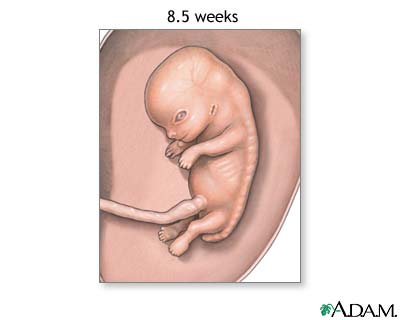
The embryo and fetus pictures came from this great NIH website.  The chart came from Guttmacher.  The motivation for this blog comes from a silly thought. If you can graduate from an American High School believing that a 12 week old fetus is a "blob of cells".  We have a major education problem in this country.  


Sunday, February 12, 2012

Catholic: Ectopic Pregnancy

On February 8th I said the following on Facebook:

Many Catholics use birth control. I suspect that even though doctrine commands that a woman should die rather than terminate her ectopic pregnancy, most Catholic doctors and most Catholic women choose to terminate the pregnancy. Does anyone know a Tebow like testimony where a woman chose to die from her ectopic pregnancy? 

I misunderstood the following section of the Catholic Encyclopedia.

After these and other similar decisions had been given, some moralists thought they saw reasons to doubt whether an exception might not be allowed in the case of ectopic gestations. Therefore the question was submitted: "Is it ever allowed to extract from the body of the mother ectopic embryos still immature, before the sixth month after conception is completed?" The answer given, 20 March, 1902, was: "No; according to thedecree of 4 May, 1898; according to which, as far as possible, earnest and opportune provision is to be made to safeguard the lifeof the child and of the mother. As to the time, let the questioner remember that no acceleration of birth is licit unless it be done at a time, and in ways in which, according to the usual course of things, the life of the mother and the child be provided for". Ethics, then, and the Church agree in teaching that no action is lawful which directly destroys fetal life. It is also clear that extracting the living fetus before it is viable, is destroying its life as directly as it would be killing a grown man directly to plunge him into a medium in which he cannot live, and hold him there till he expires.

However, if medical treatment or surgical operation, necessary to save a mother's life, is applied to her organism (though the child's death would, or at least might, follow as a regretted but unavoidable consequence), it should not be maintained that the fetal life is thereby directly attacked. Moralists agree that we are not always prohibited from doing what is lawful in itself, though evilconsequences may follow which we do not desire. The good effects of our acts are then directly intended, and the regretted evilconsequences are reluctantly permitted to follow because we cannot avoid them. The evil thus permitted is said to be indirectly intended
[1]

I misinterpreted the Catholic Encyclopedia which never should be taken as a modern source anyways. This is lazy research on my part.  The position in the Catholic Encyclopedia and the modern position is that a mother can be saved by removing the tissue around the ectopic pregnancy thereby indirectly killing the embryo.

Gingrich says life begins at implantation


GINGRICH: Well, I think the question of being implanted is a very big question. My friends who have ideological positions that sound good don’t then follow through the logic of: ‘So how many additional potential lives are they talking about? What are they going to do as a practical matter to make this real?’

I think that if you take a position when a woman has fertilized egg and that’s been successfully implanted that now you’re dealing with life. because otherwise you’re going to open up an extraordinary range of very difficult questions
[1]

Thursday, February 2, 2012

In 2005, who provided the abortions?


While looking for abortion information, I came across this study published in 2008, Abortion in the United States: Incidence and Access to Services, 2005.[1]
  • 1/3 of abortion providers are hospitals, but hospitals only performed 5% of abortions.
  • 62% of hospitals that performed abortions performed 30 or less abortions in 2005.
  • Twenty hospitals reported 400–999 abortions, and only seven reported 1,000 or more.
  • 1/5 of abortion providers are physician offices, but physician offices only performed 2% of abortions.
  • 53% of physician offices reported fewer than 30 abortions in 2005.
  • 80% of abortions are performed in a facility that performs 1000 or more abortions.
  • 381 specialized abortion clinics performed 69% of all abortions. 
  • 435 nonspecialized clinic providers performed 25% of abortions.
Trends in abortion incidence may be affected by changes in access to services. Between 1982 and 2000, the number of abortion providers declined by about 38%, from a high of 2,900 to 1,800. Some of this decline was due to a shift from hospital-based providers to specialized abortion clinics, a trend that may offer greater accessibility, because, for example, abortion clinics generally charge less than other types of providers, and many advertise, making them easier to locate. But the decline in the number of providers may mean that some women have a more difficult time locating and affording services. The proportion of counties without an abortion provider increased from 77% in 1978 to 87% in 2000, and the proportion of women of childbearing age residing in these counties increased from 27% to 34%.


Abortion providers are suffering financially from the decline in abortions.  Last year, a hospital was forced to stop providing elective abortions, because of  lack of demand.[2]  Also, notice that Planned Parenthood provides about 1/3 of abortions, but abortion is only about 3% of its services.  The vast majority of abortions in 2005 were provided by specialized abortion clinics.  If all goes well, abortion will continue to decline.

Wednesday, January 25, 2012

ABC: Baby Born Deformed After Misdiagnosed Ectopic Pregnancy


Rachel Schoger of Caldwell, Idaho, had been trying to have a baby for two years and eight months -- a grueling wait interrupted by three positive pregnancy tests and three unexplained miscarriages.

After a fourth positive test, she went to her doctor for answers. The news was devastating. "It's ectopic," Schoger recalled the doctor saying after a hormone test and an ultrasound. "I was so upset because we'd been trying for so long."

An ectopic pregnancy is one that occurs outside the womb, usually in one of the fallopian tubes. Because the fetus cannot survive and the mom could suffer life-threatening internal bleeding, ectopic pregnancies, which may account for as many as one in 40 pregnancies, are terminated at the earliest sign. Schoger's doctor recommended using methotrexate -- a chemotherapy drug that would save her and her fallopian tube, and kill the doomed fetus.

"I have three other kids at home," said Schoger, who was 29 at the time. "I couldn't take the risk."

Schoger was given two high-dose shots of methotrexate in the fatty tissue above her hips to abort her pregnancy, which was four weeks and five days along. Days later, she started having nightmares about a baby crying out in pain inside her. So when she returned to the doctor for a second round of shots a week later, she insisted on a follow-up ultrasound for peace of mind.

"I needed it to calm me down, to know I was doing the right thing," she said.

As the ultrasound technician rolled the probe over Schoger's pelvis, her jaw suddenly dropped. Schoger was still pregnant, and the fetus was in her uterus where it belonged.

Despite advances in medical imaging, roughly 40 percent of pregnancies diagnosed as ectopic are later revealed to be normal, intrauterine pregnancies, according to a 2002 study published in the journal Obstetrics and Gynecology.

And for women treated with methotrexate, the lapse can be catastrophic.

"Those fetuses that are misdiagnosed as ectopic and were actually in the uterus receive high doses of a teratogenic drug during early stage of development, and that causes malformations," said Dr. Yaron Finkelstein, an emergency physician at Sick Kids Hospital and associate professor of pharmacology and toxicology at the University of Toronto. "This is a serious problem, and one that's probably overlooked."

Finkelstein and colleagues described the effects of methotrexate on eight misdiagnosed ectopic pregnancies in a study published in the January issue of the American Journal of Obstetrics and Gynecology. Three of the pregnancies ended in miscarriage within two weeks after the injection; three were terminated surgically after the mothers were warned of the potential birth defects; and the remaining two were born -- one stillborn at 30 weeks, the other born with severe malformations at 37 weeks
...
[1]