Showing posts with label freakonomics. Show all posts
Showing posts with label freakonomics. Show all posts
Saturday, February 11, 2012

Sunday, January 1, 2012
Freakonomics: Walking While Drunk

Saturday, November 26, 2011
Not exactly only naturally...
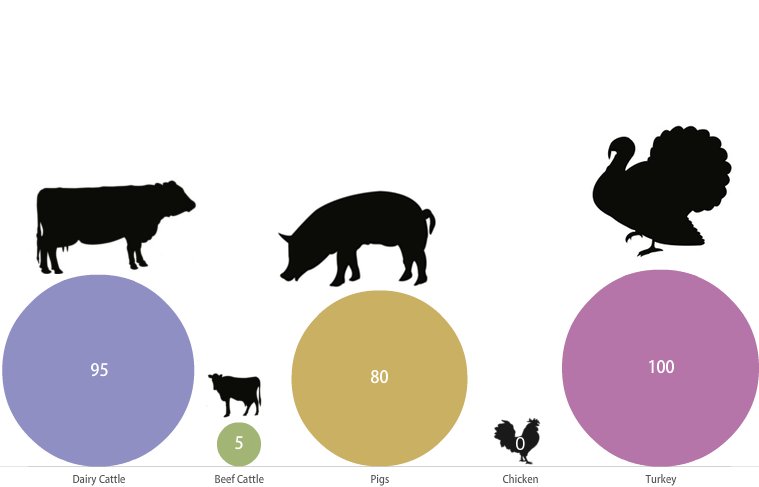
Percentage of food animals that are artificially inseminated.[Freakonomics]
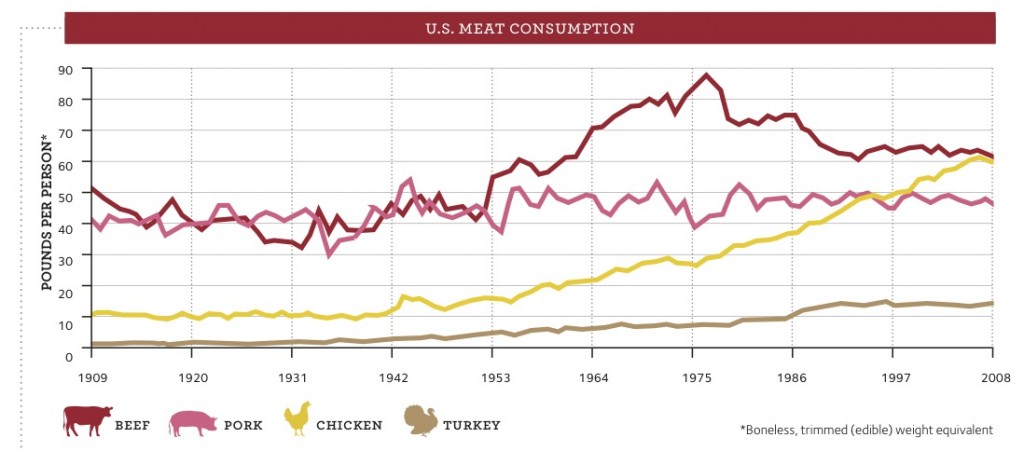
Amount of food animals that we consume.
Friday, November 11, 2011
And I’m not scared to boo in the name of Jesus
I found this on the new Freakonomics podcast: Boo…Who?
You can’t sing gospel
You can’t boo gospel.
Boo.
Oh man, I have no sympathy for gospel.
Boo, Boo.
Give him a chance, give him 30 more seconds.
All right, 15.
What are you doing?
He’s cheating. This is cheating. Singing gospel is cheating. Nobody wants to boo it.
I did.
Boo!
Thank you!
Let’s go!
BOOO! BOOOOOO!
Gospel is a cop-out. Gospel is a cop-out.
And I’m not scared to boo in the name of Jesus.
We don’t’ hold back. Boo! Boo! Boo! Boo! Boo!
DUBNER: All right, so let’s see — you shouldn’t boo kids … but … it’s OK to boo in the name of Jesus. Those are some of the rules of booing at the Apollo.
Saturday, October 29, 2011
The Upside of Quitting?
In a Freakonomics episode called "The Upside of Quitting" a woman quit her 70,000 dollar a year job to make 300,000 dollars a year as a high end prostitute. She is the 1%. :)
The ending parts about women quitting the Amish are also great.
The ending parts about women quitting the Amish are also great.
Misadventures in Baby Making

Freakonomics discusses[1]
- the 160 million girls who were aborted in Asian countries
- Levitt rehashes his abortion reduces crime theory. Basically when he was researching there were one million abortions and three million births. One out of four births being aborted since Roe v Wade explains to him why crime plummeted in the early 90's when these kids would have been teenagers. Today there is about one million abortions, but there are about four million births.[2] If Levitt is right, as the abortion rate plummets crime should increase. Today, the abortion rate is not 25%, but 19.6%. There are 4,247,694 and 1.21 million abortions. However these extra children may not be the (unwanted by their mothers) children that Levitt thinks would commit crimes. If Levitt is right about unwanted children tending to be aborted, perhaps crime will not increase.
- Dubner also discusses the new blood test for pregnant women that will replace the amniocentesis. More women will be able to find out about their down syndrome child sooner and with out threat of miscarriage. Dubner worries that this might lead to more abortions.
Wednesday, October 26, 2011
Those that predict accurately Extreme Events are wrong more often
FANG: In the Wall Street Journal survey if you look at the extreme outcomes, either extremely bad outcomes and extremely good outcomes, you see that those people who correctly predicted either extremely good or extremely bad outcomes, they’re likely to have overall lower level of accuracy. In other words, they’re doing poorer in general.
SJD NARR: Uh-oh. You catching this?
FANG: Those people who happen to predict accurately the extreme events, we also look at their–they happen to also have a lower overall level of accuracy.
DUBNER: So I can be right on the big one but if I’m right on the big one I generally will tend to be more often wrong than the average person.
FANG: On average–
DUBNER: On average.[1]
Dogmatism makes you a worse predictor
TETLOCK: That experts thought they knew more than they knew.That there was a systematic gap between subjective probabilities that experts were assigning to possible futures and the objective likelihoods of those futures materializing.
DUBNER: Let me translate that for you. The experts were pretty awful. And you think: awful compared to what? Did they beat a monkey with a dartboard?
TETLOCK: Oh, the monkey with a dartboard comparison, that comes back to haunt me all the time. But with respect to how they did relative to, say, a baseline group of Berkeley undergraduates making predictions, they did somewhat better than that. Did they do better than an extrapolation algorithm? No, they did not. They did for the most part a little bit worse than that. How did they do relative to purely random guessing strategy? Well, they did a little bit better than that, but not as much as you might hope.
DUBNER: That “extrapolation algorithm” that Tetlock mentioned? That’s simply a computer programmed to predict “no change in current situation.” So it turned out these smart, experienced, confident experts predicted the political future about as well, if not slightly worse, than the average daily reader of The New York Times.
TETLOCK: I think the most important takeaway would be that the experts are, they think they know more than they do. They were systematically overconfident. Some experts were really massively overconfident. And we are able to identify those experts based on some of their characteristics of their belief system and their cognitive style, their thinking style.
DUBNER: OK. So now we’re getting into the nitty-gritty of what makes people predict well or predict poorly. What are the characteristics then of a poor predictor?
TETLOCK: Dogmatism.
DUBNER: It can be summed up that easily?
TETLOCK: I think so. I think an unwillingness to change one’s mind in a reasonably timely way in response to new evidence. A tendency, when asked to explain one’s predictions, to generate only reasons that favor your preferred prediction and not to generate reasons opposed to it.[1]
Subscribe to:
Posts (Atom)