Wednesday, December 14, 2011
Can Pregnant Suicide Be Murder?
INDIANAPOLIS — Since suicide isn't a crime, there's no way a Chinese immigrant could have known she would be charged with murder and feticide for trying to kill herself while she was pregnant, her attorney told the Indiana Court of Appeals on Tuesday.
Bei Bei Shuai, 34, was 33 weeks pregnant when she ate rat poison Dec. 23 after her boyfriend broke up with her. Attorneys say she was attempting suicide in the midst of major depression. Shuai was hospitalized, and doctors tried to treat her for the poison. Court records show doctors told Shuai they detected little problem with the fetus until days later, when the premature baby girl was delivered by cesarean section on Dec. 31.
The child, named Angel Shuai, died three days later from bleeding in the brain after she was removed from life support. Shuai was charged in March.
Her attorney, Linda Pence, who had filed a pre-trial appeal, asked the three-judge panel to order the charges dismissed or at least allow Shuai to be released on bail.
"While it was a tragic decision, it was not unlawful," Pence said. She argued that Indiana's feticide and murder laws were written or amended to protect fetuses from violence from third parties, not from their own mothers. She said suicide isn't a crime and Shuai couldn't have expected to be arrested for attempting to kill herself.
"No pregnant woman has been put on notice that if they are depressed and try to do harm to themselves that they would be charged with feticide," Pence said.
Judge Edward Najam said that raised the argument that Shuai's due process rights had been violated. But he said the court would try first to decide the case on statutory, not constitutional, issues.
"At the heart of your case is due process," Najam said. "Your argument is that she only found out it was a crime after the fact."
Deputy attorney general Ellen Meilaender said that the case wasn't about suicide. She told the court that Shuai was charged because she "took another viable life."
"The crime is harming someone else in the context of your suicide," Meilaender told the panel, which included one man and two women.
The state has contended for months that Shuai intended to kill her unborn baby, not just herself.
Meilaender refused to concede that the statute might be vague. "It's very clear that just because you're trying to commit suicide at the time you take another life that that doesn't excuse you of liability," she said.
Pence argued that similar cases in other states had been decided in favor of the mothers. "Other states' courts seem to come to the conclusion that this is wrong and they get rid of it however they can," she said. "They realize this is a bad, bad action to charge and it doesn't belong in the criminal system." She questioned how murder and feticide laws could apply to pregnant women without also applying to legal abortion.
The judges also questioned both attorneys on how the law could apply since the infant was a fetus when Shuai allegedly ate poison, but didn't die until after she had been delivered. But Meilaender said the fact that the child was born alive didn't lessen the crime, and evidence showed without medical intervention the fetus would have died.
Najam said the judges would decide the case as soon as possible. He warned both sides not to interpret the judges' questions as a sign of which way they were leaning. "We don't know what we're going to decide," he said.
Indiana Attorney General Greg Zoeller said in a statement issued after the hearing that the charges should remain intact so Shuai's trial could proceed.
"This case generates strong opinions but the state's position adheres to the longstanding principle that a jury must weigh any facts, even those that go to the defendant's intent, and therefore the trial court is where this case belongs," he said in the statement. "The defense can argue its interpretation of the facts to the jury but the county prosecutor need not accept at face value the defense's assertions."
Groups including the American Medical Women's Association, National Advocates for Pregnant Women and the American Civil Liberties Union have filed legal briefs on Shuai's behalf.
Pence said afterward that she thought the hearing had gone well and the judges had asked pointed questions. "The judges had clearly read, really reviewed the briefs," she said.[1]

Yule Lad #3 Stubby, Shorty, or Pan Scraper

Stubby was the third called,
a stunted little man,
who watched for every chance
to whisk off a pan.
And scurrying away with it,
he scraped off the bits
that stuck to the bottom
and brims - his favorites.
[1]
Tuesday, December 13, 2011
Bismark Vs Beveridge

We are fed up with a federal government arrogant enough to declare it knows more about our health than our doctor and that is willing to risk the best health care system in the world while blatantly lying that it is not on the path to a single-payer, government-run system.[1]
However the trend is to leave Beveridge models (single payer systems) for Bismark models (individual mandates). As far as I have been able to tell, the United States would be the first Bismark model to become a Beveridge, if the fears are true. Some British are thinking about moving from a Beveridge to a Bismark. Here is an argument that I found on AdamSmith.org.
Bismarck beats BeveridgeWritten by Tom CloughertyThursday, 01 October 2009 06:030 Comments and 0 ReactionsThe Euro Health Consumer Index (ECHI) 2009 was released this week, and got lots of media coverage in the UK because it ranked the NHS 14th out of 33 countries and said the British health service was let down by waiting lists and "uneven quality performance". Only 4 counties in the EU15 (Western Europe, roughly speaking) got lower scores – Italy, Spain, Greece and Portugal.
The report is full of interesting information, but one point (on p9) particularly interested me. In their words, "Bismarck Beats Beveridge – yet again!" To explain:Bismarck healthcare systems are "based on social insurance, where there is a multitude of insurance organizations... who are organisationally independent of healthcare providers." They are named after Otto von Bismarck, who founded the German welfare state.Beveridge systems are "systems where financing and provision are handled within one organisational system, i.e. financing bodies and providers are wholly or partially within one organization." They are named after Wiliam Beveridge, who founded the British welfare state.
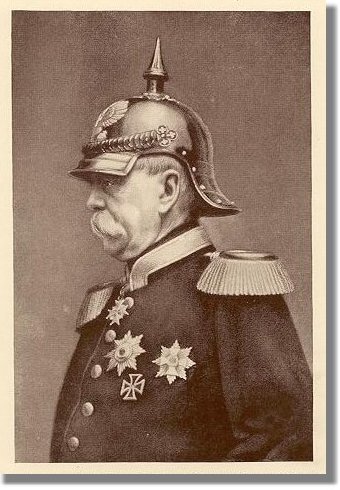
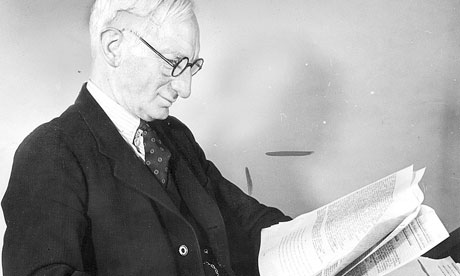
Anyway, the point the reports makes is that, "Looking at the results of the EHCI 2006 – 2009, it is very hard to avoid noticing that the top consists of dedicated Bismarck countries, with the small-population and therefore more easily managed Beveridge systems of the Nordic countries squeezing in. Large Beveridge systems seem to have difficulties at attaining really excellent levels of customer value."The following list shows the rankings of Western European healthcare systems according to their 2009 score. TheBismarck countries are in bold:(1) Holland, (2) Denmark, (3) Iceland, (4) Austria, (5) Switzerland, (6) Germany, (7) France, (8) Sweden, (9) Luxembourg, (10) Norway, (11) Belgium, (12) Finland, (13) Ireland, (14) UK, (15) Italy, (16) Spain, (17) Greece, (18) Portugal.Clearly there is something in what the authors of the ECHI say. They suggest two points which could explain the comparative underperformance of Beveridge systems:(1) Managing organizations of this size (the NHS employees 1.5m staff) requires management skills which just don't exist in the public sector. (I'd say they are extremely rare in the private sector too.)(2) The primary loyalty in Beveridge organizations tends to be to politicians and other top decision-makers, rather than patients.Adopting a competitive social insurance system like Holland's would be a huge step forward for the UK, even if – in an ideal world – I would prefer something based on medical savings accounts. You can read more about it here, in our excellent 2002 report NHS Reform: towards consensus?[2]
P.S. - A couple of obvious things need to be stated. Obama Care is not a true Bismark model in a couple of ways. One, we have many single payers systems in the country already: Indian Health Service, Medicare, Medicaid, and Veterans Administration. Medicare also has a Medicare Advantage with a private insurance option. These private insurers charge the government 14% more per senior, basically what the Republicans thought the public option would do. Two, in Obama Care the employers pick the insurers for most Americans. In a true Bismark model, the individual would pick their own insurer, thus forcing more competition.
Cigna CEO: Don't repeal U.S. health law (CATO calls it "ObamaCare = A Bailout for Private Insurance Companies") Cigna will do just fine. Also remember Cigna once blackmailed a hospital into not performing a surgery on a child. This is still legal under Obama Care.[3]
Yule Lad #2 Gully Gawk
He hides in your barn and slurps the foam off of the milk in your milk pail....

The second was Gully Gawk,gray his head and mien.He snuck into the cow barnfrom his craggy ravine.Hiding in the stalls,he would steal the milk, whilethe milkmaid gave the cowherda meaningful smile.[1]
Monday, December 12, 2011

Krampus Kristmas
This is how Anthony Bourdain's Travel Channel show, No Reservations tried to explain Krampus.http://gawker.com/5867091/travel-channel-pulls-touching-christmas-special-about-a-child+licking-demon
Yule Lad #1 Sheep-Cote Clod or Sheep Worrier

The first of them was Sheep-Cote Clod.He came stiff as wood,to prey upon the farmer's sheepas far as he could.He wished to suck the ewes,but it was no accidenthe couldn't; he had stiff knees- not to convenient.[1]
Sunday, December 11, 2011
Krampus Bruisers

In Central and Eastern Europe, parents used to ask a Catholic Priest to come beat their children with a rod for Christmas.[1] Some think that this was the origin of Krampus. I did not think that this still continued.
IRVINE, Calif. -- An Irvine couple who suspected their 15-year-old son of smoking turned to a man believed to be relied on in their church to violently discipline children, authorities said.
The parents asked Paul Kim, 39, to discipline their son after finding a lighter in his possession, dropping the boy off at Kim's Chino Hills home with permission for the beating, San Bernardino County sheriff's spokesperson Cindy Bachmann said Saturday.
Kim hit the child with a metal pole about a dozen times, causing severe bruising on his legs, according to Bachmann. The pole was about an inch in diameter, investigators said.
An adult at the boy's school saw the bruises and called Irvine police, who in turn informed San Bernardino County officials, she said.
Kim was arrested Tuesday at his home and released Thursday after posting bail. He faces a felony charge of willful cruelty to a child. No court date has been set, according to jail records.
The San Bernardino County District Attorney's office was reviewing the sheriff's department report and will decide whether to charge the teen's father, Bachman said. It wasn't immediately known whether the father was present at the time of the beating.
The names of the boy and his parents were not released.
Investigators believe Kim has been used in this way by other families in the congregation, and asked for victims and witnesses to come forward.
The name of the church was not released but Bachman said it was located in La Habra.
It wasn't immediately known whether Kim had hired an attorney. A message left at a Chino Hills listing with his name was not returned Saturday.[2]
PS - Just because Europeans formerly used a Catholic Priest to beat their children with a rod for Christmas time and a Californian church used a church member to beat their child with a rod around Christmas time; does not mean the two events are connected. Context matters, but if they were Muslims someone would cherry pick the connection.
Imagine if a Republican President had said this

When Giants Built Churches :)
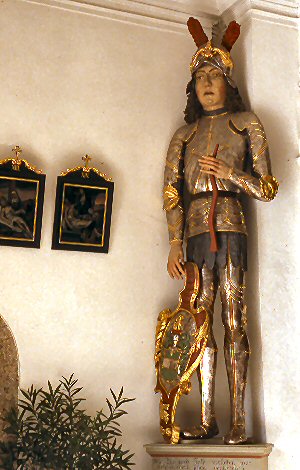
No description of Innsbruck, however brief, could be deemed complete without at least a passing reference to the famous Abbey of Wilten which stands on the outskirts of the south-western portion of the town. The present Abbey belonging to the Praemonstratensian Order was founded in the eleventh century upon the site where stood the Roman settlement of Veldidena. The Abbey and Church of that day, however, have been so frequently damaged by fire that during the centuries it has been practically reconstructed. The story of its foundation forms one of the most remarkable of Tyrolese legends, and exhibits in its incidents with extraordinary clearness the conflict taking place in those times between the doctrines of Christianity and Heathendom.
Certain authorities state that the Romans, when they entered the country, found a town already existing, which they adopted as one of their most important stations, and re-named Veldidena. This settlement, however, was, according to tradition, destroyed by Attila on his way back through the country after the desperate Battle of Chalons; but it nevertheless continued to be a largely frequented station in the stretch of country lying between the Po and the Rhine owing to the convenience of its situation and the existence of the famous Brenner Road. Afterwards came the expedition of Theodoric of Verona against Chriemhild's Garden of Roses at Worms;[about AD 500] and we are told amongst those who enlisted in Theodoric's service and distinguished themselves at the taking of the famous Rose Garden was one Ilaimo or Haimon (now believed to be the Heime of "the Heldenbuch") who, after the expedition, came through Tyrol in his master's victorious train. This Haimon was a giant, taller and more powerful even than Goliath himself; and as he approached Veldidena he found barring his progress another giant named Thyrsus (now identified as Schrudan) living near Zirl. This latter giant having heard of Haimon's prowess, and as his own supremacy had hitherto remained unchallenged, determined to force Haimon to fight him.
Theodoric's giant proved willing enough for the encounter, and scarcely, indeed, waited to be challenged. Thyrsus, although the bigger and more terrible of aspect, with a skin bronzed by the open-air life he had led, and his muscles developed and kept in condition by constant exercise, was not so skilful and wily as his opponent, whose every movement showed him to be a master in both the arts of attack and defence.
We are told that Thyrsus grasped in his hand a pine tree which he had torn up by the roots to serve as a weapon, and that at every movement of his the ground shook under his tread, which made a noise like thunder. Rushing impetuously to attack Haimon he found the latter cool and collected, watchful of his antagonist's every movement, and waiting patiently for the opportunity of striking a decisive blow. As the Titanic struggle went on, Haimon merely acting on the defensive, Thyrsus became weary, and then Haimon gathering all his force together fell upon him and slew him.
The story goes on to tell how a Benedictine monk of Tegernsee, passing whilst Haimon was still flushed with victory, stopped to reason with him on the worthlessness of mere brutal strength and all that he had hitherto deemed of value, and succeeded so well in painting the attractions of a better life that the giant was converted on the spot, and thenceforth abandoned his life of battle and bloodshed, and devoted his time and strength to the service of God. One of his first acts was to start building with his own hands a church and monastery on the site of ruined Veldidena on the banks of the Sill.
The legend tells us that he quarried the stone necessary for this undertaking with his own hands, and at last the day came when he had sufficient to lay the foundations of the church. He found, however, that the work he did in the day was always undone at night, so that he made no progress. This, though he did not know it, was the work of the devil; who, in the form of a huge dragon, had hidden himself in a cave with the express purpose of thwarting Haimon's pious intentions.
At last the latter realized that he must watch and discover what happened. This he did, and after a little time one evening the dragon emerged from his cave, lashing the ground with his tail in his fury, and filling the air with the sulphurous smoke and flame which he breathed out . Great as was his strength, Haimon at once realized that he could not overcome so terrible an enemy easily; so commending his soul to God he waited with a brave heart. Soon dawn began to break over the mountains, and at the first glimpse of light the dragon turned and fled back to his lair. Haimon, taking courage at the] sight, set off in pursuit, and by-and-by they both arrived at the cave in which the dragon was accustomed to hide during the day. The entrance was so narrow that when the monster had got partly in it was impossible for him to turn, and so Haimon, seeing his opportunity, raised his sword, and calling on God to strengthen him, cut off the dragon's head with a single blow. Then he cut out the tongue or sting of the monster as a trophy, and eventually hung it up in the sanctuary of the church. Nowadays one is shown at Wilten a representation of this dragon's tongue, which we are told was above two feet in length.
The dragon once dead the building progressed rapidly, and when it was finished Haimon, no doubt in an ebullition of joy, seized a huge rock, which he had quarried, but did not need to use for the foundations, and threw it with all his might into the valley. It was a good throw, for the rock, after nearly two miles of flight, struck against the hill of Ambras and fell into the valley, where it may yet be seen! Haimon endowed the Abbey with all the land which stretched between its site and the stone at the foot of the hill of Ambras.
Now it only remained to colonize the monastery, and ultimately the Benedictines came to inhabit it, and here the giant lived amongst them a life of penance and good works, dying in the year 878. His body, so tradition states, was buried on the right-hand side of the high altar in the church. But although many searches have been made for his remains during the period which elapsed between his death and the middle of the seventeenth century, they have never been discovered. But the last search in 1644 was disastrous as well as unsuccessful, because it undermined a great part of the wall of the church, which collapsed. The popular belief in the two giants is kept alive by the huge wooden statues representing them, which are placed at the entrance of the church. The interior of the building is in the form of a basilica, and contains not only frescoes by Caspar Waldmann, but also some good pictures by Grasmayr, Busjager, Andersag, Egid Schor, and other artists.[1]
Mentioned in another account, Thyrsus' blood sprinkled over the land which became the oil springs.[2]
Subscribe to:
Posts (Atom)